Dubai Tourism 2026: The unfiltered story of how the world’s most dazzling city is fighting back — and why right now might be the best time you’ll ever visit it
By HolidayDost | May 2026 | Destinations > UAE > Dubai
I want to tell you something that most travel websites won’t.
Dubai — the city of impossible ambitions, of buildings that scrape the clouds and man-made islands visible from space — is having a genuinely hard time right now.
Visitor numbers that were meant to hit 20 million in 2026 have been disrupted by regional geopolitical tensions. Hotels that were running near-full occupancy a year ago are recalibrating. Airlines have adjusted routes. Some international travellers have quietly moved their bookings to safer-feeling destinations. Long-haul tourists from Europe, North America, and East Asia — the kind who book luxury Gulf getaways six months ahead — pulled back when news out of the Middle East started sounding complicated.
And here is the part where I tell you the rest of the Dubai Tourism 2026 story.
Because Dubai has been here before. And if you understand what this city actually is — not just the Burj Khalifa and the bottomless brunch, but the city underneath — you will understand why what is happening right now is temporary, why the recovery is already underway, and why visiting Dubai in 2026 might actually be one of the smartest travel decisions you make this decade.
Let me take you through it — honestly, as a traveller and not as a press release.
Table of Contents
🌪️ What Actually Happened: The Honest Picture of Dubai Tourism 2026.
Let us not pretend the challenges are imaginary. Dubai tourism hit some real turbulence at the start of Dubai Tourism 2026, and the causes are worth understanding.
Regional geopolitical tensions reshaped air travel flows across the Middle East. Airspace restrictions disrupted flight schedules at Dubai International Airport — a hub that, as recently as 2025, was processing over 95 million passengers a year and had just reclaimed its title as the world’s busiest international airport. When even a fraction of that connectivity gets squeezed, the knock-on effects across hotels, retail, MICE tourism, and restaurants are immediate and significant.
Traveller psychology moved faster than the reality on the ground. Even as Dubai itself remained — and remains — entirely safe, accessible, and fully operational, booking behaviour shifted. The World Travel & Tourism Council noted that the ongoing regional situation was costing the Middle East travel industry an estimated $600 million per day in lost visitor spending at its peak. That is not a small number.
Hotel occupancy softened. Luxury properties on Palm Jumeirah, along JBR, and in Dubai Marina — segments that depend on a steady flow of premium international visitors — saw reduced staff hours and operational recalibrations. The city that had built 820 hotel establishments with over 152,000 rooms suddenly found itself with more capacity than demand for the first time in years.
And yet — and this is the part worth sitting with — none of this has actually broken Dubai. Not even close.

💪 Dubai Tourism 2026: The DNA of a City That Does Not Accept Defeat
Here is what you need to understand about Dubai that explains everything else: this is a city that was literally desert 70 years ago.
The people who built it, and the leadership that continues to guide it, have a relationship with the word “impossible” that is fundamentally different from the rest of the world. They do not avoid it. They go directly toward it.
When COVID-19 hit in 2020 and global tourism collapsed, Dubai was one of the first major international destinations to reopen, pivot, and begin welcoming travellers back with one of the most aggressive tourism recovery campaigns ever mounted. It worked. Tourist arrivals went from 3.1 million in 2020 to a then-record of 16.7 million by 2022. By 2025, the city had posted its third consecutive record-breaking year — welcoming 19.59 million international overnight visitors, closing December with more than 2 million visitors in a single month for the first time ever.
This is not a city that collapses under pressure. This is a city that uses pressure as fuel.
And the response to 2026’s challenges has been exactly what you would expect from a city wired this way.
🛠️ How Dubai Is Fighting Back: The Recovery Plan
The response has been multi-layered, fast, and — in several cases — genuinely exciting for travellers.
1. An Unprecedented Economic Support Package
From April 1, 2026, the UAE launched a comprehensive economic support package specifically targeting the hospitality and tourism industries. Financial relief for businesses, regulated pricing controls, and direct government engagement with tourism stakeholders on the ground. Issam Kazim, CEO of the Dubai Corporation for Tourism and Commerce Marketing, framed it clearly: the support is not just a short-term bandage — it is part of a longer strategy to diversify Dubai’s tourism economy and reduce its dependence on any single visitor segment or market.
This kind of decisive, rapid policy response is exactly why analysts consistently believe any Dubai downturn will be short-lived rather than structural.
2. A Brand-New AED 3 Billion Coastline
While some cities talk about recovery, Dubai builds its way out of problems. The Khor Al Mamzar Beach redevelopment — part of a staggering AED 3 billion public beach development programme — has been accelerated in 2026 as a signal of intent. This is not a renovation. It is a transformation.
The new Al Mamzar waterfront includes the region’s first floating bridge for over-water walking experiences, 5.5 kilometres of dedicated jogging and cycling tracks, new marine sports zones for kayaking and water sports, wellness pavilions, and a near-950% increase in F&B outlets along the corridor. The project is explicitly designed to move Dubai’s tourism narrative beyond luxury malls and indoor attractions — toward outdoor, community-centred, experiential public spaces that compete with the world’s great waterfronts.
If you have not visited Al Mamzar in a few years, you will not recognise it.
3. New Landmarks Coming Fast
Dubai’s pipeline of new attractions is the kind that makes other cities feel like they are standing still.
Ciel Dubai Marina — billed as the world’s tallest hotel — is among the upcoming openings confirmed by the Department of Economy and Tourism. Therme Dubai, a world-class wellness resort, is in the pipeline. The Dubai Museum of Art is coming. Palm Jebel Ali — the larger, more ambitious sibling of Palm Jumeirah — is progressing. And at a national level, a Disney Theme Park and Resort on Yas Island is confirmed, which will fundamentally change the leisure tourism calculus for families across Asia, Europe, and the subcontinent.
These are not aspirational renders on an architect’s mood board. These are funded, committed projects.
4. Going Deep on Culture — and the World Is Noticing
The era when Dubai’s only cultural claim was “biggest mall” is well and truly over. In 2025, Lonely Planet named food tours in Old Dubai among the top global travel experiences for 2026. The MICHELIN Guide Dubai expanded to list 119 restaurants across 35 cuisines, including two three-star MICHELIN restaurants — one of which, Trèsind Studio, became the first Indian restaurant anywhere in the world to receive three stars.
Dubai was also ranked the world’s best city for solo female travellers in an InsureMyTrip study across 62 cities — scoring highest for safety and for feeling safe walking alone at night. For any traveller weighing “is Dubai safe right now?” — the answer from independent global indices is emphatically yes.
The Dubai Sustainable Tourism Stamp is actively being rolled out, aligned with the D33 Agenda and UAE Net Zero 2050. More than 60% of reef modules for the DUBAI REEF marine habitat project — one of the world’s largest artificial reef systems — have already been fabricated and over 35% deployed. This is a city thinking about what it wants its oceans to look like in 50 years, not just what its Instagram grid looks like tomorrow.
5. The Region Is Uniting
Perhaps the most encouraging development for travellers is the broader regional response. Following the recent ceasefire, Qatar, Saudi Arabia, the UAE, Kuwait, Bahrain, Iraq, Turkey, and others have collectively launched coordinated tourism recovery initiatives — safety packages, aviation protocols, family-friendly promotions, and joint marketing campaigns. The WTTC has pointed out that tourism sectors historically rebound quickly and sharply once stability returns — citing recoveries after the 2008 financial crisis, the Arab Spring, and COVID-19 as precedents. There is no structural reason to believe this situation will be any different.
The tide is turning — and it is turning fast.

🏙️ Dubai Tourism 2026: What Dubai Actually Feels Like to Visit Right Now
I know what you are wondering. Forget the economics for a moment — what is it actually like on the ground?
Here is the honest answer: Dubai in 2026 feels quieter than it was in 2024 — and that, for actual visitors, is not a bad thing.
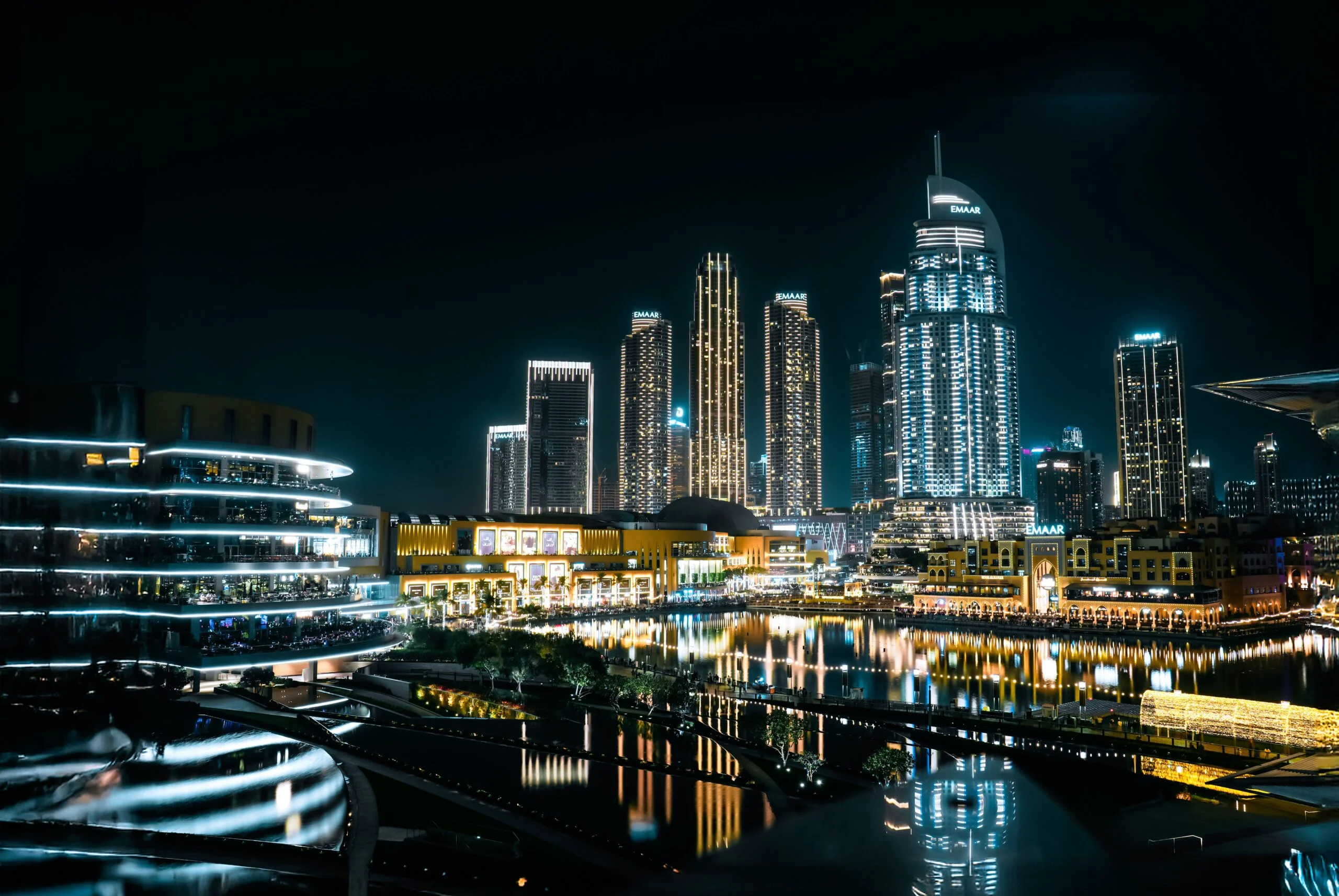
The queues at the Burj Khalifa observation deck are shorter. Getting a table at some of the best restaurants in the city is easier than it has been in years. Hotel rates at properties that were firmly in the “aspirational” category 18 months ago have become genuinely competitive. The desert safari operators are hungrier for your business and more willing to customise experiences.
If you have ever felt like Dubai was slightly too crowded, slightly too transactional, slightly too overrun with group tours and selfie queues — 2026 offers you the version of the city that residents and long-term visitors have always preferred. A little more space. A little more breathing room. A little more of the actual Dubai underneath all the hype.

🗺️ Dubai Tourism 2026: The Dubai That Does Not Make the Headlines (But Should)
Every conversation about Dubai begins and ends with the same landmarks. So let me give you the version of Dubai that most visitors miss — and that, in 2026, is particularly worth seeking out.
Old Dubai and Deira are having a genuine renaissance. The Al Fahidi Historical District, with its wind-tower architecture and narrow lanes, the abra ride across the Creek, the Gold Souk and the Spice Souk — this is Dubai before the superlatives, and it is extraordinary. The food scene here — Iraqi flatbreads from Deira bakeries at 7am, Iranian rice dishes near the Creek, Yemeni honey shops in Al Ghurair — is the best-kept secret of a city with 35 MICHELIN-recognised cuisines.
Hatta — Dubai’s mountain exclave 90 minutes from the city — offers a completely different side of the emirate. Heritage village, emerald reservoir, mountain biking trails, and the kind of silence that Dubai proper never quite achieves. The Hatta Wadi Hub has grown into a genuine adventure destination, with zip-lining, kayaking, and clifftop glamping. It is the kind of place that makes you realise how much geography Dubai actually has beyond the skyscrapers.
The Dubai Miracle Garden, open annually and the world’s largest natural flower garden, is a genuinely surreal experience — millions of flowers arranged into sculptures, figures, and archways, with the scent of the blooms carrying across the whole property. It sounds kitschy. It is, actually, remarkable.
A desert safari evening — done properly, with a small group and a reputable operator rather than a cattle-run coach tour — remains one of the great travel experiences of the Arabian Peninsula. Dune bashing as the sun drops, a quiet moment on a dune watching the horizon go orange, then a camp dinner under Orion with the silence of a desert that has no WiFi. It has not changed because the rest of Dubai has. And that is exactly what makes it so good.

🙋 Dubai Tourism 2026: The Questions Everyone Is Actually Asking
Is Dubai safe to visit right now? Yes. Dubai is consistently ranked among the safest cities on earth for international travellers. The geopolitical tensions affecting the wider region have not impacted day-to-day life or tourism operations within Dubai. Embassies of major nations continue to maintain normal travel advisories for Dubai specifically.
Are flights to Dubai running normally? Flight schedules have seen some adjustments, particularly for routes that transit certain airspaces. Direct flights from major origin markets — India, the UK, Europe, South and Southeast Asia, East Africa — are operating normally. Always check your airline for the latest schedule information and consider travel insurance with trip-disruption coverage.
Is now a good time to get better deals? Honestly? Yes. Hotel rates in some of Dubai’s premium properties are more competitive than they have been in two or three years. Travel agents are offering packages that simply were not available at this price point 18 months ago. If you have been waiting for the right financial moment to do Dubai properly — luxury stay, good restaurant, proper experiences — this is closer to that moment than 2024 or 2025 were.
What if plans change last-minute? Book with airlines and hotels that offer flexible cancellation, and invest in comprehensive travel insurance. This is good practice for any destination right now, and Dubai’s tourism operators are currently more flexible than usual on rebooking and modification policies.
✈️ Dubai Tourism 2026: A Practical Travel Notes.
Getting There: Dubai International Airport (DXB) remains the primary hub. From India: daily flights from over 20 cities. From the UK: multiple daily direct services. From East Africa: strong connectivity via Emirates and flydubai. From Southeast Asia: well-served by Emirates, Singapore Airlines, and regional carriers.
Visas: Most nationalities can obtain a UAE visa on arrival or through the online e-Visa system. Indian passport holders get 30 days visa on arrival. GCC residents (including those living in Dubai) have no visa requirements.
Best Season: October to April is the classic Dubai window — warm sunshine, cool evenings, low humidity. May to September is hot but increasingly manageable thanks to the city’s indoor infrastructure, and summer deals are genuinely exceptional.
Getting Around: The Dubai Metro is clean, fast, and efficient. RTA taxis and ride-hailing apps (Careem, Uber) are reliable. Most hotels are accessible from major metro stations.

🏁 Dubai Tourism 2026: My Final Word — As a Traveler, Not a PR Machine
I have visited Dubai enough times to stop being impressed by the skyline on its own. What still gets me, every single time, is the sheer willingness of this place. The willingness to build what has never been built. The willingness to try what has never been tried. The willingness to get knocked back and come back swinging with something nobody saw coming.
Dubai right now is in the middle of one of those moments. And here is what I know about those moments: they do not last long. The ceasefire in the region, the recovery of air travel, the opening of new landmarks, the return of traveller confidence — these are not distant possibilities. They are already in motion.
The Dubai that existed in the peak of 2025 — slightly too loud, slightly too crowded, slightly too expensive — is in a brief pause. And what is taking its place, for the next few months at least, is a version of the city that has space for you. A city that will try a little harder for your visit, offer a little more for your money, and surprise you with a little more soul than the brochure version ever suggested it had.
Go. Not in spite of what is happening. Because of it.
This is the moment when Dubai actually needs — and rewards — the travellers who are paying attention.
Planning your Dubai trip? Let HolidayDost handle the details. Visit holidaydost.com for current packages, itineraries, and expert advice tailored for travellers from the UAE, India, and beyond.
Tags: Dubai tourism 2026, is Dubai safe to visit 2026, Dubai travel guide, Dubai recovery tourism, Dubai new attractions 2026, Middle East travel 2026, Dubai hotel deals, Khor Al Mamzar Beach, Dubai MICHELIN restaurants, Dubai desert safari, Old Dubai Al Fahidi, Hatta Dubai, Dubai Marina, visiting Dubai now
Categories: Destinations > UAE > Dubai | Travel News & Trends | Middle East Travel
© 2026 HolidayDost. All rights reserved. Written by the HolidayDost editorial team.


